Do you suffer from acute or chronic lower back or neck pain? Do you have pain shooting down your leg or your arm? Have you tried every other therapy, including Chiropractic, Physiotherapy, Osteopathy, Massage and other but haven’t been able to fix your pain? Well then Spinal Decompression Therapy may be for you.
What is Spinal Decompression Therapy?
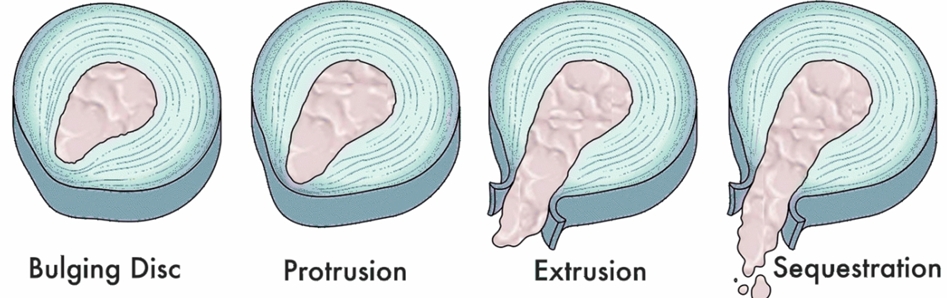
Spinal Decompression Therapy happens under ideal conditions of traction, where positive pressure in the disc changes to negative pressure, which creates a “suctioning” action that draws fluid back into the disc. Utilising a decompression table, this can create an environment for discs to heal themselves, which can help with disc bulges, herniations, extrusions and more.
During treatment, patients lay on the table for 20 to 25 minutes, where their spine gets decompressed, allowing fluid and nutrients to return back into the disc. It is a safe and effective therapy that has helped many patients of the years.
What can Spinal Decompression Therapy help with?
Non-Surgical Spinal Decompression Therapy can help with a number of conditions including:
- Disc Bulges / Herniations
- Spinal Stenosis
- Sciatica
- Disc Degeneration
- Arm and Leg Pain and Numbness
- Facet Syndrome
- Pinched Nerves
- General Neck and Back Pain that isn’t responding to other therapies
How Does The Table Work?
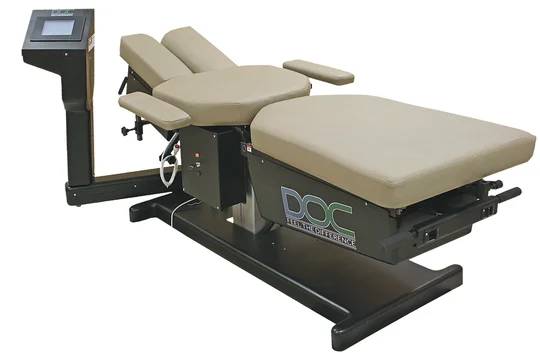
At The Chiro Lab, we utilise a highly specialised table to perform the Spinal Decompression treatment. The computerised DOC Decompression Table targets the specific injured disc and is able provide the treatment with less force compared to other decompression tables and with greater results. This the reduces the likelihood of “decompression hangover” or delayed onset muscle soreness from decompression treatments.
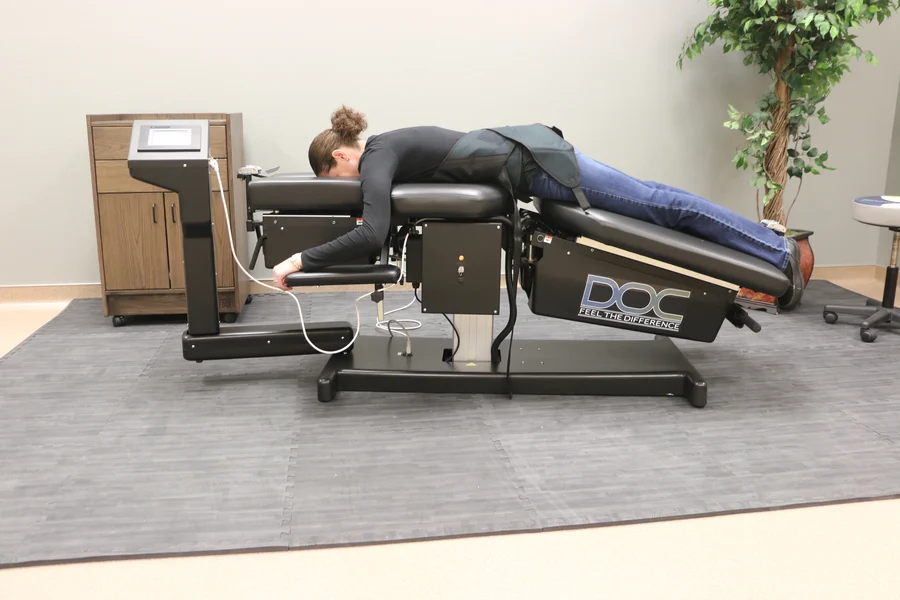
During a Spinal Decompression Treatment, patients are fully clothed and lay either face down or face up on the table. Straps and harnesses are applied to stabilise the patient and once they are in position and comfortable, the treatment begins.
Treatments last for about 20-25 minutes as the spine goes through a painless and gentle stretch and relax protocol, which creates the negative pressure for the disc to heal.
How Does Spinal Decompression Work?
When a vertebral disc is injured, herniated or bulged, this can cause significant pain. If it then compresses nearby nerves, it can then cause arm or leg pain, numbness, tingling or weakness. These symptoms can last for many years if the disc is not healed.
By decompressing the spine, space is created between the vertebrae, allowing the disc to be drawn back to it’s neutral position. Decompression causes negative pressure within the disc, which can draw the fluid back in, bring in nutrients and oxygen and rehydrate the disc. This then has a flow on physiological effect by taking the pressure off the nerve, increasing circulation and stimulating the body’s natural healing process.
What To Expect?
After booking in your initial Spinal Decompression Therapy appointment, you will be asked to fill out a new patient intake form and send us any relevant images or reports. Upon arriving at your appointment, Dr. Jeremy will take a thorough case history and perform an examination in order to diagnose your issue and come up with a specific and tailor treatment plan for your condition. This will all be explained to you.
Treatment can then happen at your first visit, assuming you are a good candidate for the treatment and no further imaging is needed. Treatments last for 20-25 minutes and may include other treatment modalities if needed. Patients occasionally experience some soreness after treatments, but this can be reduced with a short walk afterwards. Any prescribed advice or exercises will be given to you and a treatment plan moving forward will be discussed.
Frequently Asked Questions
Does the treatment hurt?
Generally, Spinal Decompression treatments are painless. However, many patients present to their appointments with severe pain, which can be exacerbated by laying down in certain positions. We will try to position you in the most comfortable position possible and if needed and utilise other modalities to reduce your pain in order to help you get the decompression treatment.
Do you crack my back as well?
Many patients contact us for Spinal Decompression Therapy as they have tried many other treatments, including Chiropractic, which haven’t helped or are scared of “back cracks”. You do not need to have your back cracked to experience this treatment. We find that patients achieve better and quicker results by combining Spinal Decompression Therapy with other modalities such as adjustments, massage, dry needling, ultrasound, exercises and more. However, it is still effective when used on its own.
How many treatments do I need?
Every treatment plan is specific to each patient and condition, however as a general guide, disc bulges/herniations require about 15-25 treatments for full, long term resolution.
Is there anything else I can do to help my healing?
Yes! Whilst Spinal Decompression Therapy is extremely effective in healing disc injuries, there are other things you can do to compliment the treatment and make it last longer. This includes core strengthening exercises, improved nutritional intake and reducing stressors that may have caused your problems initially.
Combining other modalities with your treatment can also help speed things up. This can include chiropractic adjustments, massage, dry needling, ultrasound therapy and more, which are all offered at The Chiro Lab.
Is it safe?
The short answer is yes. There are some conditions that Spinal Decompression Therapy is not recommended for, which we outline below, however our trained and experienced Chiropractor will ensure that you are a good candidate for the therapy in your initial consultation. Once cleared of any of these conditions, the therapy is extremely safe and effective.
Some patients may experience some mild muscle soreness after treatments. On rare occasions, patients may experience pain or muscle spasms, which would be monitored closely by the therapist.
What conditions is it not recommended for?
We do not recommend Spinal Decompression Therapy for conditions such as; Pregnancy, Osteoporosis/Osteopenia, Spinal Fusion, Fracture, Tumours, Failed Back Surgery and others.
We will try to catch this in your initial paperwork, however our trained Chiropractor will be able to catch it during your initial consultation.
Is Spinal Decompression Therapy backed by evidence?
It sure is. You can find the research behind it below.
Not sure if Spinal Decompression Therapy in Melbourne is for you? Contact us for more information by calling 0432 298 234.
Otherwise you can book an appointment online by clicking the link below!
Spinal Decompression Research
Retrospective Chart Review of Nonsurgical Spinal Decompression as a Therapeutic Modality for Low Back Pain – Military Medicine, Volume 190, Issue Supplement_2, September/October 2025
Conclusion: These findings suggest NSSD is an effective conservative treatment for a diverse population with LBP, addressing pain, neurological deficits, and functional impairments. NSSD may offer a cost-effective alternative to surgical interventions and pharmacological treatments, reducing the risks of opioid dependency and surgical complications. This study emphasizes NSSD as a first-line therapy for LBP, warranting broader adoption and coverage to improve patient outcomes and reduce health care costs.
Clinical and Imaging Outcomes of Non-Surgical Spinal Decompression for Lumbar Intervertebral Disc Lesions – JCC Vol. 8 Issue 1, 2025 | March 07, 2025
Conclusion: The results demonstrated that there was significant (p<0.001) improvement of pain (80%), disability (50%), and subjective recovery (75%). Further, both the average disc height and canal anterior-posterior dimension increased by 1.0-1.6 mm and 1.5-2.1 mm, respectively. Thus, non-surgical spinal decompression demonstrated good to excellent clinical outcomes as a conservative, non-surgical treatment for intervertebral disc lesions.
Effectiveness & Safety of Non-Surgical Spinal Decompression – John Leslie, MD, MBA – Mayo Clinic et al.
Patients enrolled in the study had suffered an overall average of ten years of chronic back pain. After two weeks of treatments on the DRX9000 there was a 50% reduction in pain scores and upon completion of the entire six week protocol an amazing success rate of 88.9% was documented.
Surgical Alternatives: Spinal Decompression – Orthopedic Technology Review (2003; 6 (5))
CONCLUSION: 86% of the 219 patients who completed the therapy reported immediate resolution of symptoms, while 84% remained pain-free 90 days post-treatment. Physical examination findings showed improvement in 92% of the 219 patients, and remained intact in 89% of these patients 90 days after treatment. It was shown to be effective for herniated and degenerative discs.
Decompression, Reduction, and Stabilization of the Lumbar Spine: A Cost Effective Treatment. – American Journal of Pain Management (Vol. 7, No.2, April 1997)
CONCLUSION: Eighty six percent of herniated intervertebral disc patients achieved ‘good’ (50-89% improvement) to ‘excellent’ (90-100% improvement) results with decompression. Sciatica and back pain were relieved. Facet arthrosis patients, 75% obtained ‘good’ to ‘excellent’ results with decompression.
Vertebral Axial Decompression Reduces Chronic Discogenic Low Back Pain-4 Year Study – Anesthesiology News, (Vol. 29, No. 3, March 2003)
CONCLUSION: Four year follow-up after Decompression method shows a sustained 86% reduction in pain and that 91% of patients had resumed their normal activities and has remained pain free.